
When Doing “Nothing” Is Actually Doing Everything
What seventy-two hours with no expectations revealed.

A few weeks ago I had one of those rare windows where the house was actually, genuinely quiet. My son was with his dad, Greg was traveling, and for the first time in longer than I could remember, there was no one I needed to be for anyone. No pickups, no dinners timed around someone else’s hunger, no calendar blocks telling me how to move through the afternoon. Just me, the puppies, and a whole lot of open space.
Before it started, I texted a friend and told her I was calling it “the weekend of possibilities.” Not because I had big plans, but because I wanted to see what would happen if I didn’t make any. No agenda, no productivity experiment, no pressure to use the time well. I was just curious what would show up if I stopped deciding in advance.
What I didn’t expect was how disorienting that would feel.
I hadn’t realized how much of my energy had been living in reaction mode. Not in a chaotic way (I mean, nothing was falling apart) but in that steady, low-level hum of always tracking what needs to happen next. Clients. Emails. School stuff. Volunteer logistics. The quiet mental load of knowing who needs what and when, and making sure none of it gets dropped.
It’s so normal that you stop noticing it. You cook dinner while replaying a client call in your head. You sit in the school pickup line answering emails because the time feels wasted otherwise. You fold laundry while mentally drafting something. You listen to someone talk while your brain is already three steps ahead, scanning your internal list for what still needs to get done before bed. None of it is dramatic. None of it is a crisis. But your body is rarely fully where your hands are.
I didn’t think any of that was excessive. It just felt like life. But when life is lived almost entirely in your head — solving, sorting, anticipating — you start to drift away from your body in ways you don’t notice until something breaks the pattern. You’re productive but not really present. You’re efficient but not deeply settled. You’re technically resting, but your mind is still running the checklist.
So when the house went quiet that weekend, I felt it. The absence of expectation was unfamiliar in a way I wasn’t prepared for. There was no one to accommodate, no version of myself that needed to show up and be competent. And underneath all of that, a question surfaced that I hadn’t asked myself in a while: what do I actually want to do right now?
The answer was not impressive.
I watched Game of Thrones for the first time, which I realize is almost embarrassing to admit given how long that show has been part of the cultural conversation. I binged it without trying to justify the hours. I stayed in my pajamas most of the weekend and let myself feel slightly unproductive without immediately trying to fix it. I wandered into the kitchen and made bath melts, not for any reason other than I like the tactile creativity of it. The kitchen has always felt grounding to me — not as a chore, but as a place where I can just experiment and move and think. There was no audience for any of it. No outcome I was working toward. I didn’t frame any of it as a reset or a breakthrough. I just let the weekend be what it was.
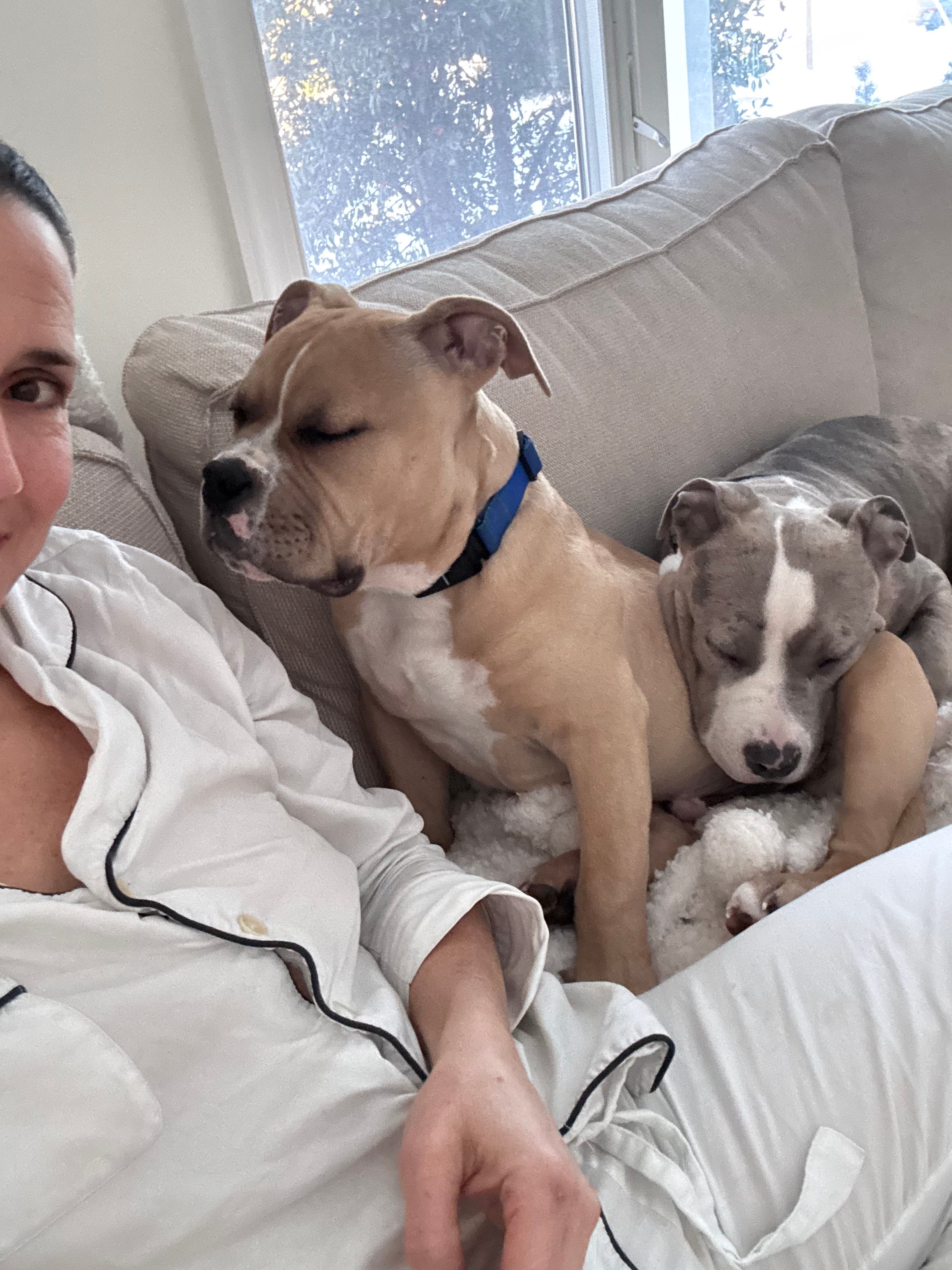
And something real happened underneath all of that ordinary quiet.
As the hours passed without anything being asked of me, my nervous system started to settle. Not in some dramatic, cinematic way, just steadily, gradually. The part of me that had been on low-level alert, always scanning for what was next, started to quiet down. My thoughts slowed enough that I could actually hear what was underneath them. And what became clear was that I wasn’t exhausted from doing too much. I was fatigued from constant responsiveness.
There’s a real difference between being busy and being in reaction mode. Busyness can be a choice. Reaction is usually a habit — the posture of being perpetually oriented toward what’s required rather than what’s actually true for you. And over time, that posture becomes invisible, because it feels like the responsible thing. Like the mature thing. You wake up already attuned to what’s needed around you. Even your rest becomes something you accomplish efficiently.
But the nervous system doesn’t thrive on constant responsiveness, even when that responsiveness is loving and competent. It needs time where nothing is being asked of it. It needs space that isn’t optimized for anything. It needs room to wander so that the deeper, quieter parts of you can come back to the surface.
What I realized that weekend wasn’t that I had been doing too much. It was that I had been listening to myself too little.
Not intentionally, not out of negligence, just incrementally, the way it happens when you spend most of your time in your head. The body’s quieter cues get easy to override. You stop asking what sounds good right now or what would actually feel nourishing, and you start only asking what needs to get done, who needs a response, what’s the most efficient use of this hour.
Efficiency and alignment are not the same thing.
Doing nothing — the way I did it that weekend — wasn’t laziness. It was recalibration. It was stepping out of the role of the steady, capable responder long enough to remember that I also have preferences and curiosities and creative impulses that deserve some air. It was letting the part of me that isn’t useful to anyone else just exist for a little while, without apology.
I know there’s often a fear around this kind of space. If I stop responding, will things fall apart? If I let myself disengage even briefly, will I lose momentum? For a lot of capable, reliable people, the honest answer feels like yes. We’ve built stability by being the ones who hold it together, and the idea of stepping out of that role — even temporarily — can feel genuinely irresponsible.
But what I experienced was the opposite. Nothing fell apart. No crisis emerged. What happened instead was that I felt my own center come back. Decisions that had felt heavy started to feel clearer. Conversations I’d been dreading felt less charged. Creativity came back without me having to force it. I didn’t leave the weekend with a plan or a breakthrough or a list of intentions. I left with a steadier pulse.
The weekend of possibilities wasn’t about what I accomplished. It was about what I allowed — to be unstructured, to be unproductive, to be absorbed in something completely fictional and trivial and unrelated to growth. To be a person, not just a role.
And in doing that, something essential came back online.
If you’ve been feeling slightly ahead of yourself lately, slightly disconnected, tired in a way that regular rest doesn’t seem to fix — it might not be because you need a better system or a more disciplined routine. It might be because you need space that doesn’t ask anything of you. Not to improve. Not to optimize. Not to prove anything to anyone.
Just to be.
A few questions to sit with — you don’t need to answer them all at once, just notice what lands:
When was the last time you had time with no expectation attached to it?
If you removed usefulness as a metric for a day, what might you find yourself drawn toward?
Where in your life are you responding automatically instead of choosing consciously?
What would a “weekend of possibilities” look like for you right now, even in a smaller window?
If your nervous system had uninterrupted space, what do you think it would ask for first?
And maybe most gently: what part of you has been waiting for permission to exist without being productive?