
When Receiving Support Feels Like Backdraft
And how we can navigate the feeling.

I’ve always loved learning. LOVED IT! Countless courses, books, trainings — I’m drawn to anything that expands how I understand myself, others, and the work I do in the world. Yoga, Pilates, reflexology, Hakomi, reiki, nervous system regulation… the list goes on and on. Learning has always felt energizing and empowering, like gathering ingredients for a life aligned with who I’m becoming.
So when I started a Mindful Self-Compassion course a few weeks ago, I expected to learn new tools and deepen concepts I’ve used for years. I believe that the work always comes back to self— how we talk to ourselves, how we see ourselves and the kindness we can give ourselves in times of struggle. What I didn’t expect was how quickly the lessons would show up in my real life — not in the classroom, but in a quiet weekday morning at home.
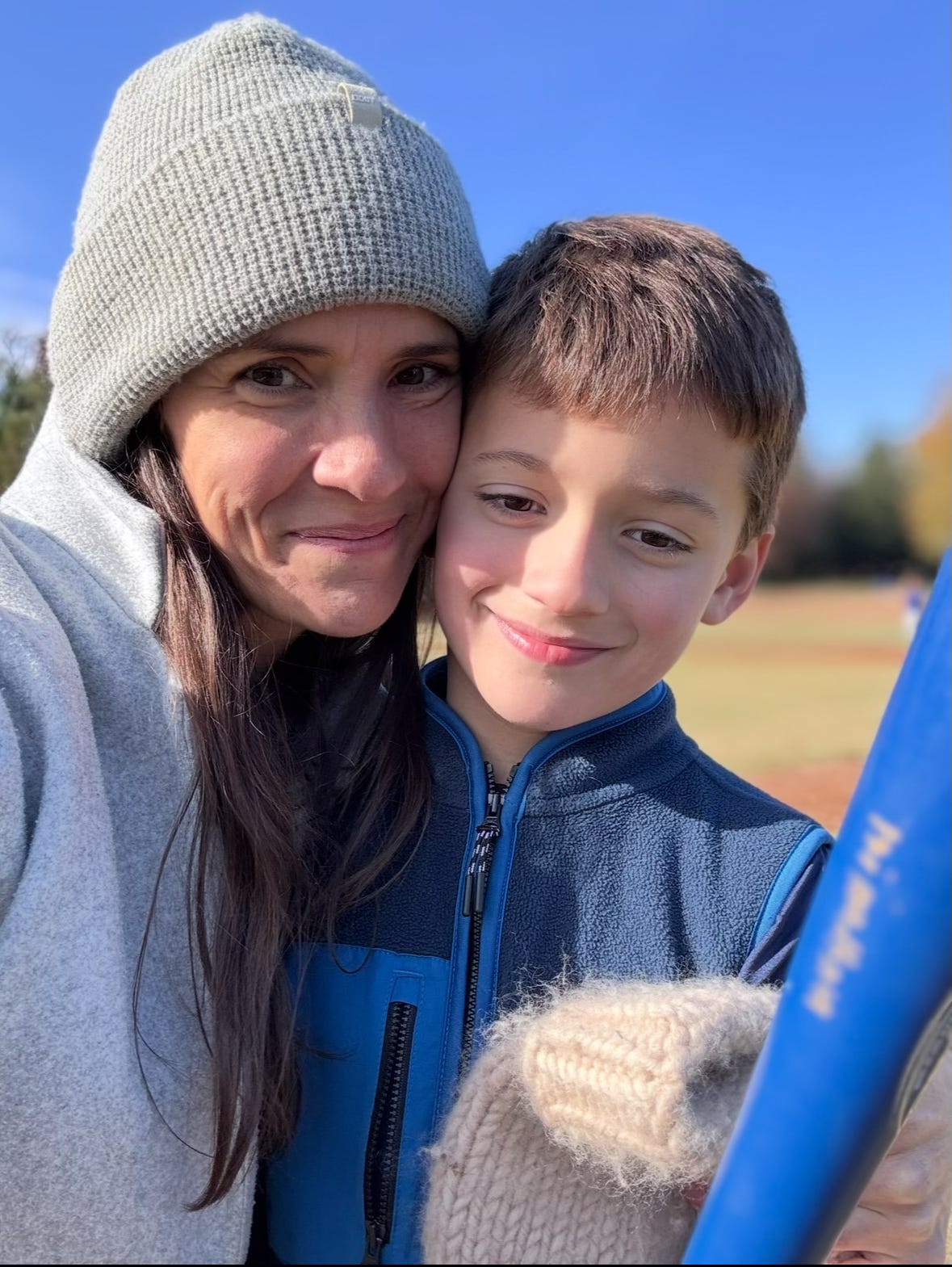
I woke up later than usual. The house was quiet and I felt rested. I walked out of my bedroom to find Alexander already dressed, backpack packed, and finishing breakfast. Greg had stepped in that morning — helping him get ready, handling the parts of the routine I’m normally responsible for. They were both content and smiling, completely in flow. It should have felt like relief.
Instead, a rush of guilt hit me.
It wasn’t logical. It was somatic — the tightening in the chest, the subtle anxiety, the instant sense of “Wait… I should be doing this.” Even though I’ve asked for more support. Even though I want it. Even though I need it. I was used to always figuring out myself; not because people didn’t pitch in and offer, but because it was what I had always done. Checked myself into rehab, navigated Christmas as a single parent, etc.
This is the part of self-compassion that we don’t talk about enough: the backdraft.
The emotional heat that rises when we open a door we’ve kept closed.
Receiving support isn’t always easy, especially for women who have spent years — or decades — doing everything themselves. Self-reliance becomes an identity. Hyper-capability becomes safety. Allowing someone else to step in can feel destabilizing, even if it’s exactly what we’ve been longing for.
In that moment, I instinctively did what I always do: I placed my hand on my heart and took a slow, grounding breath. It’s a ritual I’ve turned to for years — simple, immediate, regulating. I allowed myself to sit with the gratitude, even when the protector mind came in and said “this feels hard.” As I settled, I realized the guilt wasn’t telling me I had done something wrong. It was revealing a part of me that wasn’t used to being supported.
And this is where the difference between learning and embodiment becomes so clear.
I can understand the psychology of support.
I can teach the importance of compassion.
I can intellectually explain why shared responsibility is healthy.
I can know the theory.
But embodiment — actually receiving support in real time, letting my identity shift, allowing my nervous system to soften — that is a different level of wisdom.
Knowledge lives in the mind; wisdom lives in the body.
Knowledge understands the concept; wisdom practices it when it feels uncomfortable.
Knowledge says, “I get why this matters.” Wisdom says, “I am letting this change me.”
That morning, I let the support land. I allowed myself to feel the backdraft without running from it. And I softened into a new truth: I don’t have to do everything alone anymore.
Embodiment isn’t glamorous. It’s quiet, sometimes uncomfortable, often unexpected. But it’s where transformation happens — breath by breath, moment by moment, grounded hand over heart.
Learning opens the door.
Embodiment is what carries us through it.
This kind of gentle, identity-level unwinding is at the core of what we do in The Right Room — helping women move from functional autopilot back into their own presence and truth. If you feel a pull toward this work, I’d love to explore how we can support you.
Yes yes yes!!!👏 👏 👏
Wow, "backdraft" is a great way of explaining the obvious blowback that comes full force even when things are good, and right! Some force from our trauma comes back from that open door and bam, we feel it and now we learn to accept it as good, and right and not a flight or fight response. We became used to unhealthy environments, and thus hard to accept healthy at times. We operated at a high functioning as non-healthy, but with trauma there is alot of scary messy stuff going on, and just one moment can flood us. But hand on heart and regulating back to true healthy self is definitely wisdom and a big step forward! I am so very happy for your new little family and all the love you deserve! At 64, working to become more grounded and accepting myself everyday. It's real growth, It's Living!